Angela World: Avatar Life
- 4.6
- Rating
- 10.00M
- Installs
- Free
- Price

 Analysis by App-foxy
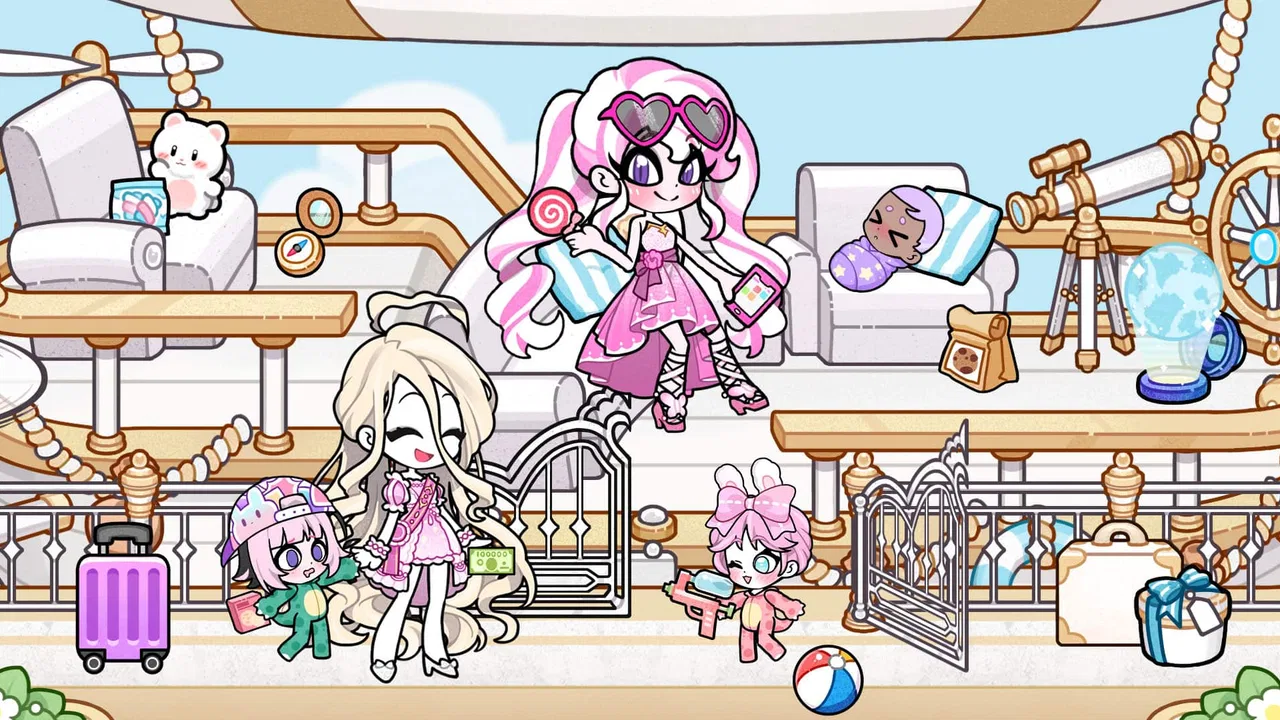
I spent time with Angela World: Avatar Life as a casual simulation game, and my first impression was that it is aimed at players who enjoy building small personal stories rather than chasing difficult objectives. The central appeal is simple: create a character, choose an outfit, arrange a scene, and turn that setup into your own little episode. That makes it especially approachable for children, relaxed players, and anyone who likes doll-house style creativity on a phone.
What makes the experience more interesting than a basic dress-up screen is the way the game encourages you to connect appearance with storytelling. I was not only choosing clothes; I was deciding what kind of character I wanted, where that character belonged, and what might happen next. The result feels closer to making short visual scenes than completing a conventional level. It works best when you treat it as a creative sandbox, not as a traditional game with a clear finish line.
How Angela World feels in its current form
The game comes from Kitten Doll Studio and is available free of charge, which makes it easy to try without committing money at the beginning. Its Everyone age rating also matches the gentle presentation and accessible concept. I can see it fitting naturally into a quiet afternoon, a short break, or a shared activity between a child and an adult who wants to help invent characters and situations.
You May Also Like

 Blood Strike: 2.5 Anniversary
Blood Strike’s Loadouts Turn Every Drop Into a Tactical Gamble
A close look at Blood Strike’s custom loadouts: how fast access to signature weapons reshapes its battle royale rhythm, rewards preparation, and narrows the gap between fights.

 Pandora - Music & Podcasts
Pandora’s Music Is Easy to Start, but Harder to Recover
Pandora’s strength is its low-effort path from a seed to a station. Its weak spot is how much confidence it asks you to place in connection, setup, and quiet recovery.

 8 Ball Pool
 Is Built on Rivalries, Rematches, and Routine
A close look at the rivalries, rematches, shared routines, and unanswered safety questions that turn a quick pool match into a persistent mobile community.

 Samsung Music
’s Quiet Strength Is Playing What You Already Own
Its reach comes less from spectacle than from dependable access to a personal library. That simplicity is both the app’s strongest retention engine and its ceiling.

 AccuWeather: Weather Radar
AccuWeather Review: A Quick, Clear Forecast for Everyday Decisions
For everyday plans, the best forecast is the one you can understand quickly. AccuWeather makes rain timing, radar, and local conditions easy to act on, with a few trade-offs.

 Hill Climb Racing
Why Hill Climb Racing Still Turns Crashes Into One More Run
A tiny car, a bumpy hill and one more upgrade: Hill Climb Racing keeps resurfacing because its simple chaos makes every near-miss feel personal.
More From Our News Desk



Its audience is already substantial, with more than ten million installs and an average score of 4.6 from roughly fifteen thousand ratings. Those figures suggest that the combination of avatars, clothing, and personal stories has found a wide audience. They do not automatically make the game perfect, though, and my experience was more positive when I accepted its relaxed pace instead of expecting a deep simulation.
The opening appeal is immediate. You can focus on how a character looks, then use that design as the starting point for a scene. Players who enjoy matching colors, changing styles, and creating different personalities will probably understand the attraction within minutes. Someone looking for action, strategy, competition, or a demanding progression system will likely find the experience too gentle.
Creating a character with a purpose
A useful way to approach the editor is to begin with a role rather than random items. I had better results when I decided that a character was going to be a student, a performer, a traveler, or a friend arriving at a party. That small decision gave each clothing choice a reason. Without it, dress-up can become a long sequence of taps that looks attractive but does not lead anywhere.
I also recommend making one deliberate change at a time. Start with the overall style, then adjust the outfit, and only afterward refine the details. This prevents the common problem of adding too many unrelated elements and losing the character’s identity. It is a small workflow improvement, but it makes the game feel more like designing a cast than repeatedly changing a mannequin.
The strongest personal use case is creating a group with contrasting personalities. Instead of making every avatar fashionable in the same way, I tried giving each one a recognizable role. One character could be practical, another dramatic, and another deliberately playful. That approach gives the scenes more variety and makes returning to the same world feel worthwhile.
Turning dress-up into short stories
The story-making side is where the title earns its “world” concept. A single outfit is enjoyable for a moment, but a sequence of scenes gives the choices more meaning. I found it helpful to plan a simple beginning, change, and ending: a character arrives, something unexpected happens, and the group reacts. The game does not need a complicated plot to support this kind of play.
For a realistic everyday scenario, imagine using it during a rainy afternoon when a child is bored but does not want a competitive game. You could create two characters, decide that they are preparing for an event, and let the child choose the clothes and setting while an adult asks questions about the story. That turns a short mobile session into a shared creative exercise. It is also a better way to use the game than simply scrolling through options without a goal.
Older players may enjoy it as a lightweight visual planning tool for fictional characters. I would not call it a full animation or writing application, but it can help someone experiment with a cast, a mood, or a scene before developing the idea elsewhere. The limitation is that the depth comes from the player’s imagination, so those expecting the app itself to provide rich narrative structure may feel that they are doing most of the creative work.
What the current release tells me
The current version is 4.7, while the game was released on March 25, 2025. That places it in a relatively early stage compared with long-established avatar platforms, so I view the present release as a snapshot of an evolving product rather than a final statement of everything it might become.
For existing players, a newer version number can be reassuring because it shows that the project has moved beyond its initial launch. At the same time, version progress alone does not tell me whether every desired feature has arrived. I would judge the game by how comfortable the current creative loop feels: opening the editor, making a character, arranging a story, and deciding whether I want to repeat the process.
The practical effect for a new player is that there is little reason to delay trying it if the concept appeals to you. You can start with a simple character and learn the rhythm without needing prior knowledge. Returning users, meanwhile, should pay attention to how each update affects their established creations and routines rather than assuming that a larger version number automatically changes the entire experience.
Where the free model affects the experience
The download is free, but optional purchases range from $2.99 to $13.99 per item. That matters because dress-up games naturally encourage collecting. Once I had started imagining different characters, it was easy to think about what additional choices might help complete a particular style or scene.
My advice is to decide on a creative goal before spending. If you want to make one character and explore the basic storytelling loop, begin without buying anything. If you are using the game as a regular hobby and a particular purchase clearly supports the kind of scenes you want to create, it may feel more worthwhile. Buying simply because an item is available is less satisfying, especially when the fun comes from inventing stories rather than owning every option.
This model also affects how I would recommend the game to families. An adult should be involved in purchase decisions, even though the content rating is Everyone. The gentle theme does not remove the need to manage spending on a device shared with children. Setting a personal limit before playing is more useful than deciding in the middle of an enthusiastic dress-up session.
What works better than the usual alternatives
Compared with a conventional life simulation, this game is easier to approach because it does not require me to learn a complicated economy, maintain a demanding schedule, or optimize a character’s progress. I can open it with a specific idea and start creating almost immediately. That makes it a good choice for short sessions and for players who care more about appearance and imagination than management.
Compared with a pure dress-up application, the story angle gives the choices more context. An outfit can belong to a character with a purpose, and a group can become a small cast. That extra layer is modest, but it changes the way I use the editor. I am more likely to build a scene and revisit it mentally instead of treating every look as a separate fashion exercise.
There is a trade-off. More structured simulation games usually offer clearer goals, stronger progression, and a greater sense of accomplishment. More advanced creative tools may offer deeper control over scenes and presentation. Angela World sits between those extremes: it is more expressive than a simple wardrobe, but lighter and less demanding than a full life-management game. Choosing it makes sense when convenience and gentle creativity matter more than complexity.
Small techniques that improve the experience
One technique I found valuable was creating a “visual rule” for each story. For example, I might keep one color associated with a character, or make every scene connected to a particular mood. This reduces indecision in the editor and makes the final sequence feel intentional. It also helps children understand how repeated design choices can communicate personality.
Another useful habit is to make a rough story outline before changing the wardrobe. I would decide who is present, what they want, and what changes by the end. This prevents the scene from becoming a collection of attractive but unrelated details. It is a simple distinction, yet it separates purposeful play from endless browsing.
I also recommend using contrast rather than giving every character the same level of decoration. A quieter design can make a more colorful character stand out, while a practical outfit can tell the viewer something different from a theatrical one. The game becomes more rewarding when the player notices these relationships instead of judging each avatar alone.
The gaps I noticed
The main limitation is that the game depends heavily on self-directed play. If I did not bring my own idea, the activity could feel repetitive sooner than it would in a goal-driven simulation. Players who need missions, challenges, competition, or a strong reward path should look elsewhere. This is not a flaw in the concept so much as a clear boundary around what the game is trying to be.
Another point is that the creative quality depends on the player’s organization. Without a plan, it is easy to spend time changing details without producing a scene that feels complete. I would have preferred the game to guide storytelling more firmly, but that guidance might also reduce the freedom that attracts its core audience.
The purchase structure can create a second kind of friction. Free access lowers the barrier to entry, but collecting can make the experience feel less complete if a player constantly focuses on unavailable or paid choices. I found the game more enjoyable when I treated the free starting point as a creative challenge rather than as a preview of a collection I had to finish.
It is also not the right recommendation for someone who wants a realistic life simulator. The title uses the language of avatars and everyday stories, but the appeal is imaginative presentation, not detailed systems or serious consequences. If you want resource management, long-term planning, or a complex virtual routine, another simulation will serve you better.
Who should try it and who should skip it
I would recommend it to players who enjoy dolls, character styling, gentle role-play, and making up short scenes. It is particularly suitable for someone who wants a creative mobile activity that can be understood quickly. Families can also use it as a conversation starter, with one person designing a character and another inventing the character’s background or next event.
I would be more cautious recommending it to players who lose interest without objectives. If you prefer games that tell you exactly what to complete, unlock, or master, the open-ended structure may feel empty. The same applies to players who want a large social or competitive component; this experience is personal and imaginative rather than performance-focused.
Device compatibility is reasonably broad because the minimum requirement is Android 6.0. That makes it accessible to people who are not using a recent phone, although the actual comfort of play will still depend on the device and how smoothly it handles the game. I would keep enough storage and battery available for a relaxed session rather than treating it as something to run constantly in the background.
What I would watch as the game develops
Because the release is still relatively young and the current version is 4.7, I would watch for improvements that make personal storytelling easier without turning it into a rigid mission system. Better organization for characters and scenes would be especially valuable for players who create a growing cast. The best future direction would preserve the quick dress-up appeal while giving returning users more ways to build continuity.
I would also pay attention to how the balance between free creativity and paid items develops. The game is most welcoming when a player can understand its appeal before considering a purchase. Optional spending works better when it expands a player’s chosen style instead of making the basic creative loop feel unfinished.
For current users, the sensible approach is to keep experimenting rather than waiting for every possible addition. Make a small cast, give each character a clear role, and build short scenes around them. That method reveals whether the existing version already offers the kind of freedom you want. If it does, future changes become bonuses rather than requirements.
For me, Angela World: Avatar Life succeeds as a friendly, low-pressure simulation experience with a clear creative identity. It is free to start, suitable for Everyone, and supported by a large player base, but its real value depends on whether you enjoy supplying the imagination that drives the stories. Kitten Doll Studio has created something approachable rather than demanding, and that is both its strength and its limit.
I would recommend giving it a try if you want to design avatars and turn them into a small cast of characters. I would skip it if you need deep simulation mechanics, competitive goals, or a tightly guided campaign. The best way to enjoy it is to enter with a plan, keep purchases intentional, and judge each session by the scene you created rather than by how many items you collected.
FAQs for Angela World: Avatar Life
01What is Angela World: Avatar Life about?
Angela World: Avatar Life is a dynamic simulation game where players create and customize their own avatars, explore vibrant virtual environments, and engage in various social and interactive activities. The game emphasizes creativity and social interaction, offering a variety of customization options and events to keep players engaged.
02Is Angela World: Avatar Life free to play?
Yes, Angela World: Avatar Life is free to download and play. However, it does offer in-app purchases for players who wish to enhance their experience. These purchases are optional and include items such as clothing, accessories, and special event passes that can enrich the gameplay.
03What platforms is Angela World: Avatar Life available on?
Angela World: Avatar Life is available on both Android and iOS platforms. Users can download it from the Google Play Store for Android devices and the Apple App Store for iOS devices. Make sure your device meets the app's system requirements for optimal performance.
04Does Angela World: Avatar Life require an internet connection?
Yes, an internet connection is required to play Angela World: Avatar Life. The game features real-time interactions and social activities that require connectivity. A stable internet connection ensures smooth gameplay and the ability to participate in live events and community interactions.
05How does Angela World: Avatar Life handle user privacy and data?
Angela World: Avatar Life takes user privacy seriously and complies with privacy regulations. The app collects necessary data to provide a personalized experience but ensures that this data is protected and used responsibly. Users can review the privacy policy within the app for detailed information on data handling and protection measures.
Pros
- Highly customizable avatars for unique expression.
- Engaging mini-games to keep players entertained.
- Vibrant community for social interaction and fun.
- Regular updates with new content and features.
- User-friendly interface enhances the experience.
Cons
- In-app purchases can be quite expensive.
- Requires constant internet connection to play.
- Limited free customization options available.
- Occasional glitches disrupt gameplay experience.
- Notifications can become overwhelming at times.

Angela World: Avatar Life
Gallery